The Truth Nobody Tells You About Starting a Supplement Routine
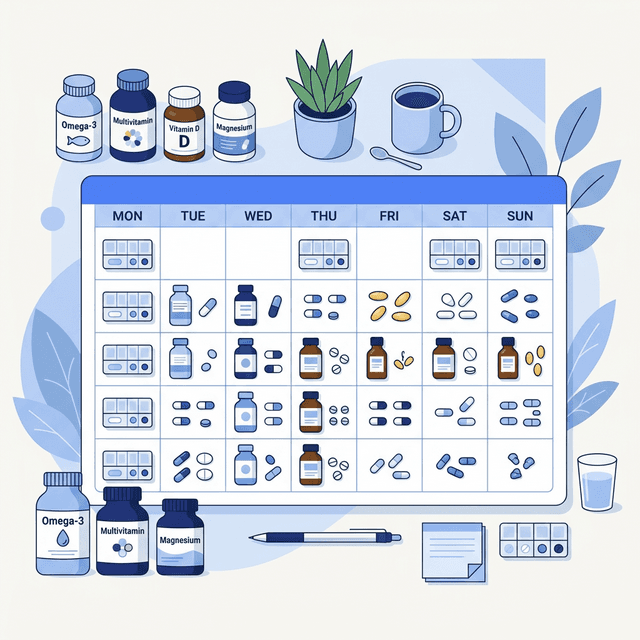
There's a moment most supplement users know well: you buy a handful of products with the best intentions, you take them diligently for about a week, and then life happens. You travel, you get busy, the bottle gets moved to a different shelf. Three weeks later you're wondering if you even took any this week. Sound familiar? You're not alone — and it's not a willpower problem. It's a systems problem.
Week one is always the easy part
The first week of a new routine runs on novelty and motivation. You've just spent money, you're excited, and the habit is fresh. But motivation is famously unreliable. When it fades — and it always does — what's left? For most people: nothing. No structure, no reminders, no clear reason why Tuesday's dose matters more than skipping it. The people who maintain supplement routines long-term aren't more disciplined than average. They've just made the habit require less decision-making by attaching it to something that already happens every day.
The attachment strategy
Habit researchers call it "habit stacking" — anchoring a new behaviour to an existing one. Morning supplements go next to the coffee machine. Evening supplements go on the nightstand next to your phone charger. The cue (making coffee, plugging in your phone) triggers the action automatically, without you having to remember. This sounds almost too simple, but it works. Customers who receive specific placement advice — not just "take with meals" but "put the bottle beside your kettle" — report significantly higher consistency at the 60-day mark.
What consistency actually produces
Most supplements need 4-12 weeks of consistent use to deliver their full effect. Magnesium's impact on sleep quality takes about 3-4 weeks to really show up. Vitamin D levels in the blood take 2-3 months to meaningfully shift. Probiotics need 4-6 weeks to establish themselves in the gut. This isn't a flaw — it's just biology. The problem is that most customers expect faster results, get discouraged, and quit right before things start working. Setting honest, timeline-based expectations upfront changes everything.
The role of brands in all of this
Here's the part brands often miss: your job doesn't end at the sale. It ends at the result. If your customer bought magnesium for better sleep and stopped after two weeks because they didn't notice anything, that's a missed outcome for them and a lost customer for you. A simple piece of guidance — "expect to feel a difference in sleep quality around weeks 3-4, stay consistent until then" — can keep someone on track long enough to actually experience the benefit you know is coming.
A supplement routine isn't just a list of products. It's a habit system. The brands that help customers build that system — not just sell them ingredients — are the ones building loyal, long-term customers in 2026.